 EN
EN

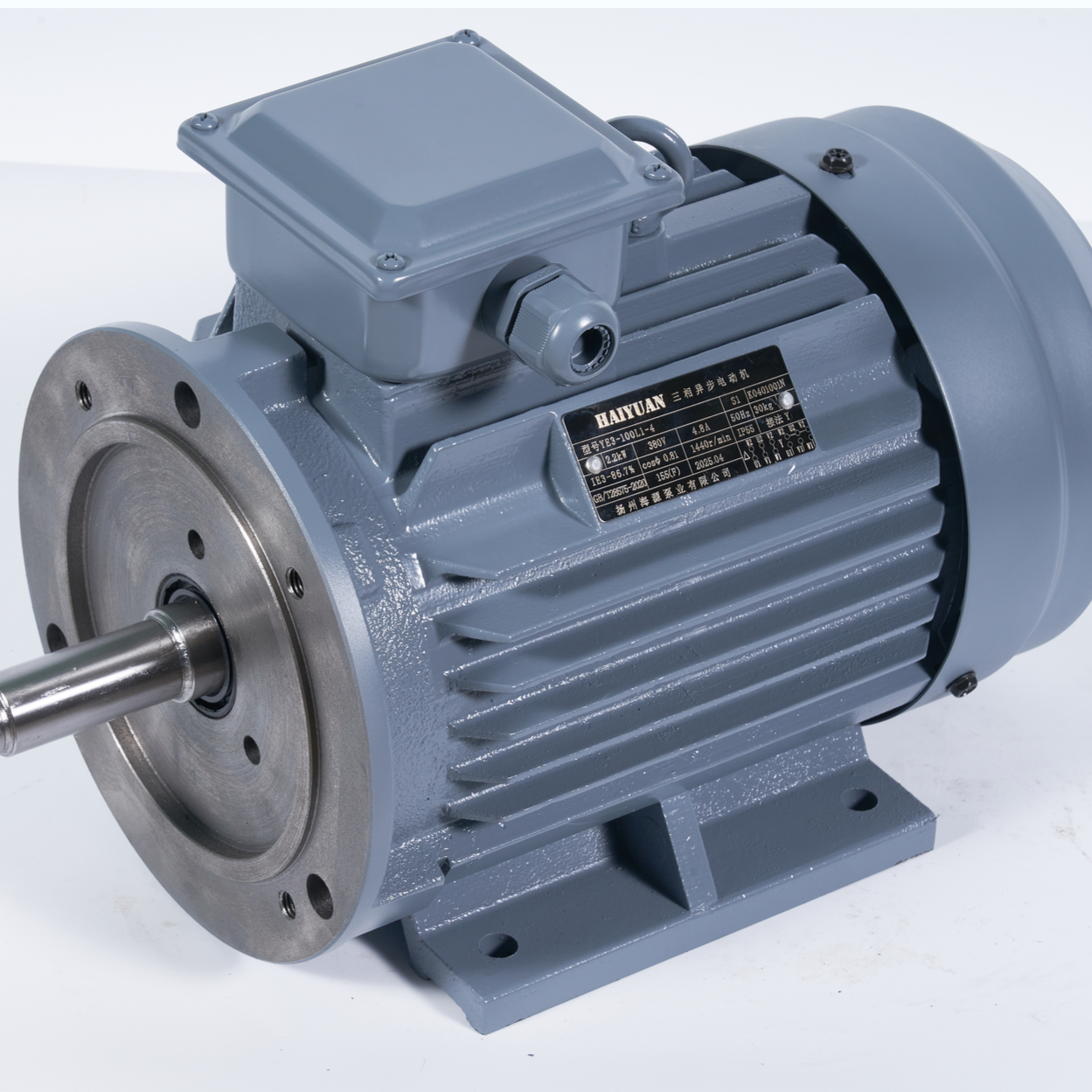
Industrial machinery and heavy-duty applications require reliable power transmission systems that can handle substantial loads while maintaining operational efficiency. The selection of appropriate gear reducers plays a crucial role in determining the success and longevity of mechanical systems across various industries. Understanding the four major series of gear reducers available in today's market enables engineers and procurement specialists to make informed decisions that optimize performance and reduce operational costs.
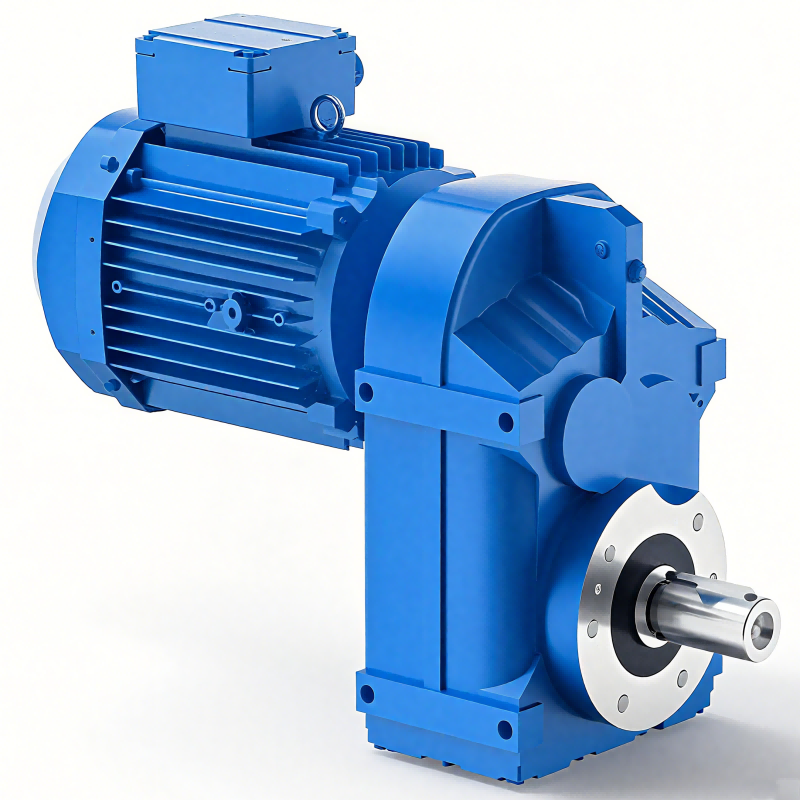
Modern manufacturing facilities rely heavily on gear reducers to convert high-speed motor rotation into lower-speed, higher-torque output suitable for driving conveyor systems, mixers, crushers, and other heavy machinery. The four primary series of gear reducers each offer distinct advantages and are engineered to address specific operational requirements. These series include helical gear reducers, worm gear reducers, planetary gear reducers, and bevel gear reducers, each designed with unique characteristics that make them suitable for particular applications and environmental conditions.
Understanding Helical Gear Reducer Fundamentals
Construction and Design Principles
Helical gear reducers feature angled teeth that create a gradual engagement pattern, resulting in smoother operation and reduced noise levels compared to straight-cut gears. The helical design distributes load across multiple teeth simultaneously, increasing the load-carrying capacity and extending service life. These gear reducers typically achieve efficiency ratings between 94% and 98%, making them highly suitable for continuous operation in demanding industrial environments.
The construction of helical gear reducers incorporates precision-manufactured gears with specific helix angles that optimize performance characteristics. The angled teeth create axial thrust forces that must be properly managed through appropriate bearing selection and housing design. Modern helical gear reducers utilize advanced metallurgy and heat treatment processes to achieve superior hardness and wear resistance, ensuring reliable operation even under extreme loading conditions.
Application Advantages and Performance Characteristics
Helical gear reducers excel in applications requiring smooth power transmission with minimal vibration and noise generation. Their high efficiency and excellent load distribution make them ideal for conveyor systems, paper mills, steel processing equipment, and material handling machinery. The parallel shaft configuration of many helical gear reducers simplifies installation and maintenance procedures while providing excellent accessibility to internal components.
The versatility of helical gear reducers allows for multiple mounting configurations, including foot-mounted, flange-mounted, and shaft-mounted arrangements. This flexibility enables engineers to optimize space utilization and achieve optimal alignment with driven equipment. Additionally, helical gear reducers can accommodate various input speeds and provide a wide range of reduction ratios, typically from 1.25:1 to 450:1 in single-stage configurations.
Worm Gear Reducer Characteristics and Applications
Unique Design Features and Mechanical Properties
Worm gear reducers utilize a unique configuration where a threaded worm shaft engages with a worm wheel to achieve speed reduction and torque multiplication. This design inherently provides high reduction ratios in a compact package, often achieving ratios from 5:1 to 100:1 in a single stage. The perpendicular shaft arrangement makes worm gear reducers particularly valuable in applications where space constraints require a 90-degree power transmission solution.
The self-locking characteristic of many worm gear reducers provides an additional safety feature, preventing back-driving when the system is not powered. This property makes them excellent choices for lifting applications, positioning systems, and other scenarios where holding torque is required. However, the sliding contact between the worm and wheel results in higher friction losses compared to other gear reducer types, typically achieving efficiencies between 50% and 90% depending on the reduction ratio and design specifications.
Optimal Applications and Industry Uses
Worm gear reducers find extensive application in industries requiring compact, high-ratio speed reduction with excellent positioning accuracy. Food processing equipment, packaging machinery, and material handling systems frequently utilize worm gear reducers due to their space-efficient design and reliable performance. The smooth operation and low noise characteristics make them suitable for applications in noise-sensitive environments.
The thermal characteristics of worm gear reducers require careful consideration in continuous-duty applications due to the heat generation inherent in the sliding contact design. Proper lubrication selection and cooling provisions ensure optimal performance and service life. Many modern worm gear reducers incorporate advanced synthetic lubricants and enhanced cooling features to address thermal management requirements in demanding applications.
Planetary Gear Reducer Technology and Benefits
Advanced Design Configuration and Efficiency
Planetary gear reducers represent sophisticated engineering solutions that achieve exceptional power density and efficiency through their unique sun-planet-ring gear configuration. Multiple planet gears distribute loads evenly, enabling these gear reducers to handle substantial torques while maintaining compact dimensions. The coaxial input and output shafts simplify installation and provide excellent torsional rigidity for precision applications.
The efficiency of planetary gear reducers typically exceeds 95%, making them ideal for energy-conscious applications where operational costs are critical considerations. The multiple load paths through the planet gears provide inherent redundancy, enhancing reliability and service life. Advanced planetary gear reducers incorporate precision manufacturing techniques and specialized materials to achieve exceptional accuracy and repeatability in positioning applications.
High-Performance Applications and Precision Requirements
Planetary gear reducers excel in applications demanding high precision, excellent dynamic response, and compact packaging. Robotics, CNC machinery, and servo applications frequently specify planetary gear reducers due to their low backlash characteristics and exceptional torsional stiffness. The balanced design minimizes vibration and provides smooth operation across a wide speed range.
The modular nature of many planetary gear reducer systems allows for multiple stages to achieve higher reduction ratios while maintaining efficiency. This scalability makes them suitable for applications ranging from small servo motors to large industrial drives. The ability to handle both radial and axial loads simplifies system design and reduces the need for additional support bearings in many applications.
Bevel Gear Reducer Applications and Selection
Directional Power Transmission Solutions
Bevel gear reducers provide essential solutions for applications requiring power transmission between intersecting shafts, typically at 90-degree angles. The conical gear design enables efficient torque transfer while changing the direction of rotation, making them indispensable in many industrial configurations. Modern bevel gear reducers utilize spiral bevel gears that provide smoother engagement and higher load capacity compared to straight bevel designs.
The robust construction of bevel gear reducers enables them to handle substantial shock loads and provide reliable service in harsh operating conditions. Advanced manufacturing techniques ensure precise gear geometry and optimal contact patterns, resulting in extended service life and reduced maintenance requirements. These gear reducers often incorporate specialized bearing arrangements to manage the complex load patterns generated by bevel gear operation.
Industrial Applications and Performance Optimization
Bevel gear reducers find extensive use in mining equipment, agricultural machinery, and marine applications where directional power transmission is required. Their ability to handle heavy loads while providing precise speed control makes them valuable in crusher drives, mill applications, and heavy-duty conveyor systems. The perpendicular shaft arrangement often simplifies overall system design and reduces space requirements.
Selection of appropriate bevel gear reducers requires careful consideration of load characteristics, environmental conditions, and maintenance accessibility. The complex geometry of bevel gears necessitates precise alignment during installation to ensure optimal performance and service life. Modern bevel gear reducers incorporate advanced sealing systems and corrosion-resistant materials to withstand challenging operating environments.
Selection Criteria and Performance Optimization
Load Analysis and Torque Requirements
Proper selection of gear reducers begins with comprehensive analysis of load characteristics, including steady-state torque, peak torque requirements, and duty cycle considerations. Understanding the nature of driven equipment helps determine appropriate service factors and safety margins required for reliable operation. Shock loads, reversing cycles, and starting torque requirements significantly influence gear reducer selection and sizing decisions.
Thermal analysis plays a crucial role in gear reducer selection, particularly for continuous-duty applications. Heat generation varies significantly among different gear reducer types, with efficiency directly impacting thermal load. Environmental temperature conditions, available cooling, and lubricant selection all influence thermal performance and must be considered during the selection process to ensure optimal service life and reliability.
Environmental Considerations and Maintenance Requirements
Operating environment significantly impacts gear reducer performance and service life, requiring careful evaluation of temperature extremes, humidity, chemical exposure, and contamination levels. Corrosive atmospheres may necessitate specialized materials or protective coatings to ensure reliable operation. Gear reducers intended for outdoor applications require enhanced sealing systems and weather-resistant finishes to withstand environmental challenges.
Maintenance accessibility and service requirements vary substantially among gear reducer types, influencing long-term operational costs and system availability. Some gear reducers require periodic lubricant changes and adjustment procedures, while others are designed for extended maintenance-free operation. Understanding maintenance requirements during the selection phase enables proper planning for service procedures and spare parts inventory management.
Installation and Integration Best Practices
Mounting and Alignment Procedures
Proper installation of gear reducers requires meticulous attention to alignment tolerances, foundation requirements, and coupling selection. Misalignment introduces premature wear, increased vibration, and reduced service life, making precision installation procedures essential for optimal performance. Modern gear reducers often incorporate flexible coupling systems that accommodate minor misalignment while protecting internal components from external forces.
Foundation design must provide adequate support and vibration damping to ensure stable operation throughout the expected service life. Dynamic forces generated during operation require proper consideration in foundation design and anchor bolt selection. Temperature variations can cause dimensional changes that affect alignment, necessitating thermal expansion provisions in system design and installation procedures.
System Integration and Performance Monitoring
Integration of gear reducers into complex mechanical systems requires coordination with motor selection, control systems, and driven equipment characteristics. Proper system matching ensures optimal efficiency and prevents operational problems that can arise from incompatible components. Modern gear reducers often incorporate condition monitoring provisions that enable predictive maintenance strategies and system optimization.
Performance monitoring systems can provide valuable insights into gear reducer operation, including temperature trends, vibration patterns, and lubricant condition. Early detection of developing problems enables proactive maintenance interventions that prevent costly failures and extend service life. Advanced monitoring systems can integrate with plant-wide maintenance management systems to optimize service scheduling and parts inventory.
FAQ
What factors determine the most suitable type of gear reducer for a specific application?
The selection of appropriate gear reducers depends on several critical factors including required speed reduction ratio, torque capacity, efficiency requirements, mounting configuration, and environmental conditions. Load characteristics such as shock loads, duty cycle, and starting torque significantly influence the choice between helical, worm, planetary, or bevel gear reducers. Additionally, space constraints, noise limitations, and maintenance accessibility requirements play important roles in the selection process.
How do efficiency ratings compare between different gear reducer series?
Efficiency ratings vary significantly among gear reducer types, with planetary and helical gear reducers typically achieving 94-98% efficiency, making them ideal for energy-conscious applications. Worm gear reducers generally operate at 50-90% efficiency depending on reduction ratio, while bevel gear reducers typically achieve 92-96% efficiency. The efficiency difference directly impacts operating costs and heat generation, making it a crucial consideration for continuous-duty applications.
What maintenance requirements should be expected for different gear reducer types?
Maintenance requirements vary substantially among gear reducer types, with helical and planetary units typically requiring periodic lubricant changes and routine inspections. Worm gear reducers may need more frequent attention due to higher heat generation and lubricant degradation. Sealed planetary gear reducers often provide maintenance-free operation for extended periods, while bevel gear reducers require careful attention to alignment and bearing condition. Proper maintenance scheduling based on manufacturer recommendations ensures optimal service life and reliability.
How do environmental conditions affect gear reducer selection and performance?
Environmental conditions significantly impact gear reducer performance and longevity, with temperature extremes affecting lubricant viscosity and component expansion rates. High humidity and corrosive atmospheres require specialized sealing systems and materials to prevent internal contamination and corrosion. Outdoor applications necessitate weather-resistant finishes and enhanced protection against moisture intrusion. Dust and debris exposure requires appropriate filtration and sealing provisions to maintain internal cleanliness and prevent premature wear of gear reducer components.
Table of Contents
- Understanding Helical Gear Reducer Fundamentals
- Worm Gear Reducer Characteristics and Applications
- Planetary Gear Reducer Technology and Benefits
- Bevel Gear Reducer Applications and Selection
- Selection Criteria and Performance Optimization
- Installation and Integration Best Practices
-
FAQ
- What factors determine the most suitable type of gear reducer for a specific application?
- How do efficiency ratings compare between different gear reducer series?
- What maintenance requirements should be expected for different gear reducer types?
- How do environmental conditions affect gear reducer selection and performance?