 EN
EN

In the rapidly evolving world of industrial automation and robotics, precision motion control stands as a cornerstone of technological advancement. Among the various mechanical components that enable this precision, RV reducers have emerged as the gold standard for robotic applications requiring exceptional accuracy and reliability. These sophisticated gear reduction systems combine the benefits of planetary and cycloidal gear arrangements to deliver unmatched performance in demanding industrial environments. The superior characteristics of RV reducers make them indispensable in applications where traditional gear systems simply cannot meet the stringent requirements of modern robotics.
Understanding the Fundamental Design of RV Reducers
The Unique Dual-Stage Architecture
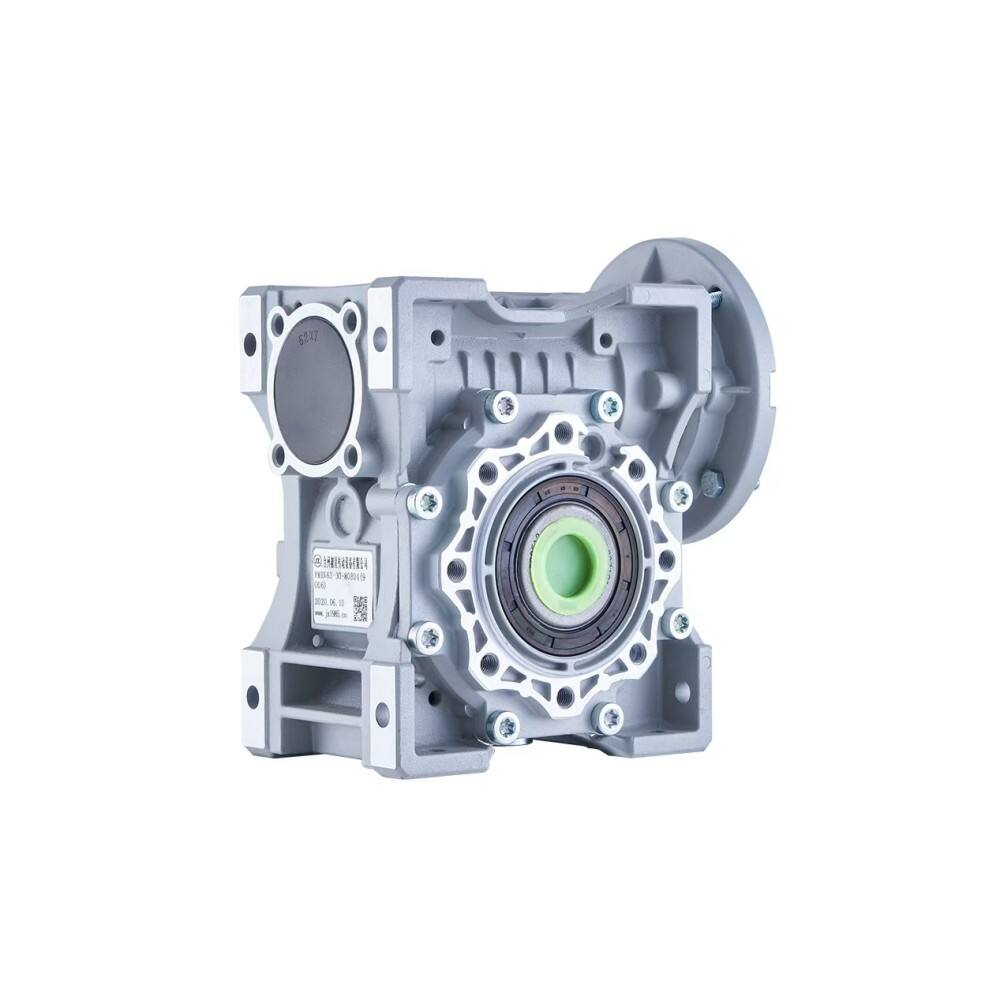
RV reducers employ a distinctive two-stage reduction mechanism that sets them apart from conventional gear systems. The first stage utilizes a standard planetary gear arrangement, while the second stage incorporates a cycloidal disc mechanism. This dual-stage configuration allows RV reducers to achieve extremely high reduction ratios while maintaining compact dimensions and exceptional precision. The planetary stage provides initial speed reduction and torque multiplication, while the cycloidal stage further refines the motion control with minimal backlash and superior accuracy.
The innovative design of RV reducers integrates multiple gear teeth engagement simultaneously, distributing loads evenly across the entire system. This load distribution characteristic significantly enhances the durability and reliability of the reducer while minimizing wear and tear. The cycloidal disc component rotates eccentrically within a ring of pins, creating a smooth and precise output motion that is ideal for robotic applications requiring consistent performance over extended operational periods.
Advanced Materials and Manufacturing Precision
The manufacturing of RV reducers demands exceptional precision and high-quality materials to achieve their renowned performance standards. Premium steel alloys undergo specialized heat treatment processes to enhance hardness and wear resistance while maintaining optimal flexibility. The gear teeth are precisely machined and finished to achieve mirror-like surfaces that minimize friction and maximize efficiency. This attention to manufacturing detail ensures that RV reducers can maintain their accuracy specifications throughout millions of operational cycles.
Modern production facilities utilize advanced CNC machining centers and coordinate measuring machines to guarantee dimensional accuracy within micrometers. The assembly process requires skilled technicians who understand the critical importance of proper clearances and preload settings. Quality control procedures include comprehensive testing of each unit to verify backlash, efficiency, and torque transmission capabilities before shipment to end users.
Superior Performance Characteristics
Exceptional Precision and Repeatability
The most compelling advantage of RV reducers lies in their ability to deliver exceptional precision and repeatability in motion control applications. With backlash values typically under 1 arc-minute and positioning accuracy within seconds of arc, these reducers enable robotic systems to achieve the exacting standards required in precision manufacturing, medical devices, and aerospace applications. The inherent design stability of RV reducers ensures that this precision is maintained consistently over time, even under varying load conditions.
The smooth operation of RV reducers contributes significantly to the overall system performance by eliminating vibrations and irregular motion patterns that can compromise product quality in manufacturing processes. This characteristic makes them particularly valuable in applications such as semiconductor fabrication, where even microscopic positioning errors can result in significant production losses. The predictable and repeatable nature of RV reducers allows control system engineers to implement more sophisticated motion profiles and achieve higher throughput rates.
High Torque Density and Compact Design
RV reducers excel in delivering high torque output relative to their physical size, a characteristic known as torque density. This advantage stems from their unique design that engages multiple gear teeth simultaneously, effectively distributing the transmitted forces across a larger contact area. The result is a compact reducer capable of handling substantial loads while occupying minimal space within the robotic system architecture. This space efficiency is particularly valuable in modern robotic designs where weight and size constraints are increasingly important considerations.
The compact nature of RV reducers enables robot designers to create more streamlined and efficient mechanical configurations. The reduced size and weight contribute to improved dynamic response characteristics and lower power consumption, as the system inertia is minimized. Additionally, the high torque density allows for the use of smaller, more efficient motors, further enhancing the overall system efficiency and reducing operational costs.
Industrial Applications and Versatility
Robotic Joint and Axis Control
RV reducers have become the standard choice for major joint applications in industrial robots, particularly for the shoulder, elbow, and wrist joints where precision and reliability are paramount. Their ability to maintain accurate positioning under varying loads makes them ideal for applications ranging from automotive assembly lines to electronics manufacturing. The smooth operation and minimal backlash of RV reducers enable robots to perform delicate assembly tasks, precision welding, and intricate material handling operations with consistent quality.
In six-axis industrial robots, RV reducers typically handle the three major axes that bear the highest loads and require the greatest precision. The inherent torsional rigidity of these reducers ensures that programmed tool paths are followed accurately, even when the robot experiences external forces or moments. This reliability has made RV reducers indispensable in applications such as automotive spot welding, where precise electrode positioning is critical for consistent weld quality.
Specialized Manufacturing and Process Equipment
Beyond traditional robotics, RV reducers find extensive application in specialized manufacturing equipment where precise rotary motion control is essential. Machine tool spindle drives, rotary tables, and indexing mechanisms frequently incorporate RV reducers to achieve the accuracy and repeatability required for high-quality machining operations. The ability of these reducers to maintain precision under varying cutting forces and thermal conditions makes them valuable components in advanced manufacturing systems.
In semiconductor manufacturing equipment, RV reducers enable the precise positioning of wafer handling systems and inspection equipment. The clean operation and minimal particle generation characteristics of properly maintained RV reducers make them suitable for cleanroom environments where contamination control is critical. Similarly, in pharmaceutical and biotechnology applications, the smooth and precise motion control provided by RV reducers supports automated systems for drug discovery, sample handling, and quality testing procedures.
Maintenance and Operational Considerations
Lubrication and Service Requirements
Proper maintenance of RV reducers requires attention to lubrication systems and periodic service procedures to ensure optimal performance throughout their operational life. High-quality synthetic lubricants are typically specified to provide adequate protection for the precisely machined gear surfaces while maintaining consistent viscosity across temperature variations. The sealed design of most RV reducers helps retain lubricants and exclude contaminants, reducing maintenance frequency compared to open gear systems.
Regular inspection procedures should include monitoring of operating temperatures, vibration levels, and backlash measurements to detect potential issues before they impact system performance. Many modern RV reducers incorporate condition monitoring capabilities that provide real-time feedback on operational parameters. Preventive maintenance programs can extend service life significantly while maintaining the precision characteristics that make RV reducers valuable in critical applications.
Installation and Integration Guidelines
Successful integration of RV reducers into robotic systems requires careful attention to mounting procedures, alignment specifications, and coupling arrangements. Proper installation ensures that the inherent precision of the reducer is preserved throughout the mechanical transmission path. Mounting surfaces must be machined to precise flatness and perpendicularity specifications to prevent distortion of the reducer housing that could affect gear mesh quality.
The selection of appropriate couplings and connection methods is crucial for maintaining system accuracy and preventing premature wear. Flexible couplings can accommodate minor misalignments while rigid couplings provide maximum precision transmission. Environmental considerations such as temperature variations, moisture exposure, and potential contamination must be evaluated when specifying RV reducers for specific applications. Proper installation practices and regular maintenance schedules ensure that these precision components deliver their expected performance throughout their operational life.
Future Developments and Technology Trends
Advanced Materials and Manufacturing Techniques
The continued evolution of RV reducers incorporates advanced materials science and manufacturing technologies to enhance performance characteristics and extend service life. Research into new steel alloys and surface treatment processes promises to improve wear resistance and reduce friction losses. Advanced manufacturing techniques such as powder metallurgy and additive manufacturing offer potential for creating complex geometries that optimize load distribution and reduce weight.
Nanotechnology applications in surface coatings and lubricants show promise for further reducing friction and wear in RV reducers. These developments could lead to even higher precision capabilities and extended maintenance intervals. The integration of smart materials and embedded sensors within RV reducers may enable real-time monitoring of operational conditions and predictive maintenance capabilities that optimize system availability and performance.
Integration with Digital Control Systems
The future of RV reducers lies in their integration with advanced digital control systems that can leverage their precision capabilities to achieve even higher levels of performance. Developments in servo control algorithms and feedback systems promise to extract maximum benefit from the inherent characteristics of RV reducers. Machine learning and artificial intelligence applications may enable adaptive control strategies that optimize motion profiles based on real-time system conditions.
Industry 4.0 initiatives are driving the development of connected RV reducers that can communicate operational data to manufacturing execution systems and maintenance management platforms. This connectivity enables more sophisticated predictive maintenance strategies and optimization of production schedules based on equipment condition. The combination of precision mechanical components like RV reducers with advanced digital technologies represents the future direction of industrial automation and robotics.
FAQ
What makes RV reducers more precise than traditional planetary gear reducers
RV reducers achieve superior precision through their unique dual-stage design that combines planetary and cycloidal gear arrangements. The cycloidal stage provides exceptional accuracy with backlash typically under 1 arc-minute, while the multiple gear teeth engagement distributes loads evenly and minimizes wear. This design results in positioning accuracy within seconds of arc, far exceeding the capabilities of conventional planetary reducers that typically have backlash values of 3-10 arc-minutes.
How long can RV reducers operate before requiring maintenance or replacement
High-quality RV reducers are designed for operational lives exceeding 10,000 hours under normal industrial conditions, with some applications achieving 20,000 hours or more with proper maintenance. The actual service life depends on factors such as load conditions, operating speed, environmental conditions, and maintenance practices. Regular lubrication and adherence to recommended service intervals can significantly extend operational life while maintaining precision specifications throughout the service period.
Are RV reducers suitable for all types of robotic applications
While RV reducers excel in applications requiring high precision and reliability, they may not be the optimal choice for every robotic application. They are particularly well-suited for industrial robots, precision positioning systems, and applications where accuracy and repeatability are critical. For applications prioritizing cost over precision, or those with lower torque requirements, alternative gear systems such as harmonic drives or standard planetary reducers might be more appropriate. The selection should be based on specific performance requirements, budget constraints, and operational conditions.
What factors should be considered when selecting RV reducers for a specific application
Key selection factors for RV reducers include required reduction ratio, output torque specifications, precision requirements, operating speed range, and environmental conditions. The mounting configuration, input and output shaft arrangements, and integration with existing control systems must also be evaluated. Additionally, considerations such as expected service life, maintenance accessibility, and total cost of ownership should influence the selection process. Consulting with experienced application engineers can help ensure optimal reducer selection for specific requirements.
Table of Contents
- Understanding the Fundamental Design of RV Reducers
- Superior Performance Characteristics
- Industrial Applications and Versatility
- Maintenance and Operational Considerations
- Future Developments and Technology Trends
-
FAQ
- What makes RV reducers more precise than traditional planetary gear reducers
- How long can RV reducers operate before requiring maintenance or replacement
- Are RV reducers suitable for all types of robotic applications
- What factors should be considered when selecting RV reducers for a specific application